You have likely done the standard Bengaluru morning routine. You woke up at 4:30 AM on a Saturday, negotiated the Hebbal flyover before traffic built up, driven up the paved hairpin turns of Nandi Hills, paid your vehicle fee at the gate, climbed the granite steps, had a hot tea near the top, and made it back home in time for lunch. Or perhaps you took a train to Makalidurga, walked along the railway track, and did the two-hour scramble up the boulder-strewn hill.
After completing a few of these local climbs around the Deccan Plateau, taking the next step into the Western Ghats feels like a logical progression. However, many hikers assume that walking uphill for five kilometers on a dry granite hill like Savandurga requires the exact same effort as walking five kilometers through the rainforests of Chikkamagaluru or South Canara. When looking for the easiest western ghats trek from bangalore, understanding the practical differences in terrain, weather, and logistics is essential before you board a night bus.
How Western Ghats Trails Differ from Local Bengaluru Hills
The hillocks around Bengaluru, such as Skandagiri, Anthargange, and Devarayanadurga, consist primarily of exposed granite monoliths, dry scrub vegetation, and clear, predictable pathways. If it rains, the water runs off the rock face quickly. If you get tired, the vehicle parking area is rarely more than two hours behind you.
The Western Ghats present a completely different environment. Here is what changes the moment you cross into the Malnad region:
- Underfoot conditions: Instead of dry rock with reliable grip, trail surfaces alternate between thick tree roots, wet clay that sticks to your soles, loose leaf litter, and moss-covered stream crossings.
- Overnight travel: Local hill climbs require an hour or two of driving from the city center. Reaching trailheads in Kudremukha, Chikkamagaluru, or Sakleshpur requires an overnight journey of 6 to 9 hours by road from Bengaluru.
- Microclimates: Weather in the Ghats changes rapidly. You can start a climb under clear skies at 8:00 AM and find yourself in dense mist with zero visibility and sudden heavy downpours by 10:00 AM, regardless of what the general weather forecast predicted.
- Terrestrial leeches: From June through November, damp leaf litter hosts active leeches. They are entirely harmless from a medical standpoint, but they surprise almost every first-timer who has only hiked on dry granite.
- Forest permits: Unlike local hills where you often buy a ticket at a base turnstile, state forest reserves in the Western Ghats operate under daily caps. You must arrange entries through the official Aranya Vihaara portal before setting out. Current entry permit details and open slot dates must be verified on the portal prior to travel.
Evaluating the First-Timer Trail Options
If you are stepping off Nandi Hills and want a true Western Ghats experience without signing up for an exhausting 18-kilometer endurance walk, three specific trails offer manageable entry points.
1. Kurinjal Peak (Kudremukh Forest Range)
Located deep inside the Kudremukh National Park area, Kurinjal is often considered the ideal baseline trail for beginners. The path follows an old forest department route originally built for light utility transport, which means the incline is remarkably gradual. You do not encounter steep rock steps or vertical scrambles.
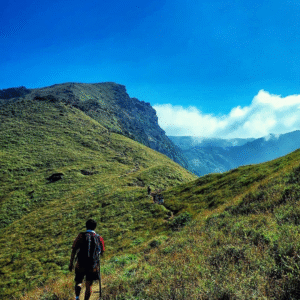
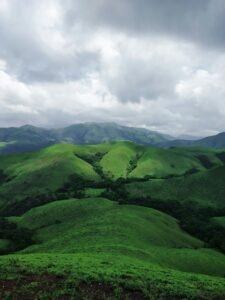
The trail passes through thick shola forest canopy for the first two-thirds of the walk, keeping you shielded from the direct sun. The final section opens onto grassy ridgelines offering sweeping views of the surrounding valley. The total elevation gain is steady rather than aggressive, making it physically easier on the knees than descending Makalidurga.
2. Ballalarayana Durga and Durgadahalli
Situated near Rani Jhari viewpoint in the Chikkamagaluru region, this trail offers historical ruins, rolling grasslands, and dramatic drops into the Netravathi valley. The distance from the base at Durgadahalli to the fort ruins is relatively short compared to major peak treks in the area.
The terrain consists mostly of open grassland trails with mild inclines. The primary challenge here is exposure to wind and sun along the upper ridge, along with slippery mud sections near the stream crossings during monsoon months. It serves as an excellent warm-up for anyone wanting wide-angle ridge views without severe physical strain.
3. Ettina Bhuja
Ettina Bhuja, named after its resemblance to an ox’s hump, is accessible from Byrapura or Nanya near Mudigere. The trek is brief in terms of total hiking time, but it features a brief, very steep climb near the rocky summit block. If you want to test how your body handles a steep incline over a short distance, this is a solid choice. You can read more about entry requirements in our guide to Ettina Bhuja permits on Aranya Vihaara.
Terrain and Gear: Preparing for Your First Trip
Stepping onto a Ghats trail in regular city sneakers is a common mistake for people graduating from paved paths. Smooth rubber soles that grip fine on dry granite at Nandi Hills will act like ice skates on wet clay or damp moss.
Here is what you genuinely need for your first weekend trail in the Ghats:
- Trekking shoes with deep lug patterns: You do not need expensive alpine boots, but you need shoes with deep rubber treads that cut through soft mud.
- Leech socks: If you are traveling between June and November, tight-weave cotton leech socks worn over your regular socks prevent leeches from reaching your skin.
- A dedicated rain layer: A basic plastic poncho or waterproof jacket is mandatory. Windbreakers will soak through within ten minutes during a Ghats rain shower.
- A 20-liter daypack with a rain cover: You will carry your own water, packed lunch, and extra layers while your main luggage stays at your homestay or vehicle.
At Elneeru, when Bengaluru trekkers consult us about moving beyond local day hikes, we frequently guide them toward trails like Kurinjal or Ballalarayana Durga first so they can adapt to rainforest conditions before attempting longer, harder routes like Kumara Parvatha or Netravathi.
Logistics: Permits and Seasonality
Before planning your trip, review the broad regulations outlined in the Karnataka trek permits guide. Forest department policies regarding trail access, guide mandates, and daily visitor caps change periodically to prevent overcrowding and protect fragile ecosystems.
Seasonality also dictates what kind of trail experience you will have:
- Monsoon (June to September): Heavy rain, thick fog, leeches, full streams, and vibrant greenery. Views from peaks are often blocked by mist, but the forest experience is intense.
- Post-Monsoon (October to December): Clear blue skies, lower humidity, green ridges, and moderate temperatures. This is generally considered the best window for first-time hikers.
- Late Dry Season (January to March): Golden dry grass, warmer daytime temperatures, and clear visibility. Trails are dry and non-slippery, though forest fire risk increases during this period.
If you are looking for wider recommendations across the state, browse our compilation of the best treks in Karnataka to compare distances, difficulty ratings, and terrain types across different forest divisions.
Making the Final Decision
If you can walk up Makalidurga or Savandurga without stopping every ten minutes for air, your lungs and legs are ready for an entry-level Western Ghats trail. The key difference will not be the steepness of the hill, but how well you handle the environment—the damp air, the mud, the early morning bus rides, and the unpredictable weather.
Start with a moderate option like Kurinjal or Ballalarayana Durga. Once you have managed your footwork on wet clay and experienced a rainforest canopy, you can confidently move on to the longer day treks that define trekking in South India.