It is 10:00 PM on a Friday night under the Goraguntepalya flyover in Bengaluru. You are standing with a 30-litre rucksack, watching non-AC sleeper buses and tempo travellers pull up to the curb. Nearby, small clusters of people are adjusting their gear, waiting for their pickup leads. If you are traveling alone for the first time, this moment can feel unsettling. You are about to spend six to eight hours in a vehicle with strangers, heading toward a trail in the Western Ghats where phone network disappears within an hour of reaching the base village.
Finding safe trekking groups for solo female in bangalore is less about marketing claims and more about understand how group operators handle night transport, trail privacy, forest checkposts, and emergency communication. Here is an honest breakdown of how weekend trekking logistics actually work from Bengaluru, what to expect on the trail, and how to evaluate an operator before signing up.
Overnight Bus Travel from Bengaluru
Most weekend treks to Malnad and Coastal Karnataka depart late Friday evening between 9:00 PM and 11:00 PM. The standard pickup points are Shantala Silk House near Majestic, Yeshwanthpur and Goraguntepalya. Majestic is the one worth knowing about if you are travelling alone, because several operators board there on the same departure nights, so the kerb is busy and lit rather than empty. Only a few operators pick up from Koramangala, Domlur or MG Road, so do not assume a southern or eastern pickup is on offer until you have checked. Depending on your destination, the road journey lasts anywhere from six hours (to Sakleshpur or Chikkamagaluru) to nine hours (to Kukke Subrahmanya or Samse).
Night journeys rely either on 12-to-12 force tempo travellers or 30-seater mini-buses. For solo female travelers, vehicle safety comes down to pre-departure coordination and seating protocols:
- Pre-trip Communication: A responsible operator forms a dedicated WhatsApp group by Thursday evening. This group should list the exact vehicle registration number, driver contact details, lead contact details, and a clear pickup schedule.
- Seating Allocations: Trip leads should coordinate seating arrangements before boarding begins. Solo female trekkers should always be paired alongside other female participants or given independent window seats, rather than placed next to unvetted male solo travelers.
- Highway Pit Stops: Drivers usually stop around midnight near Nelamangala or Kunigal for fuel and washroom breaks. Reputable groups choose clean, well-lit family restaurants along National Highway 75 or National Highway 48 rather than unlit roadside dhabas.
Group Ratios and Female Trip Leads
Weekend trekking groups out of Bengaluru typically range from 12 to 25 participants. On most general trails, roughly 30% to 50% of the group consists of female solo travelers or small groups of women friends. You will rarely be the only woman in the group.
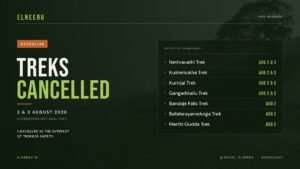
When evaluating safe trekking groups for solo female in bangalore, ask specifically about the lead structure. A group of 15 to 20 usually runs with one or two leads, and which it is depends on the trail rather than the headcount. A shorter day trail such as Kurinjal or Gangadikal is fine with one. A long day such as Kumara Parvatha or Kudremukha needs two, a primary lead in front and a sweep lead at the back so that nobody is walking alone. Separately from the operator’s own leads, the Forest Department assigns one of its forest guides for every ten trekkers, and that guide joins the group at the start point of the trek.
Having female leadership changes trail dynamics significantly. When we run trips at Elneeru, we ensure batches with female registrants have a female trip lead or female co-lead on board. Beyond handling medical first aid, female leads provide a comfortable point of contact for personal logistics, fatigue management, and privacy concerns along the trail.
Bathroom Logistics and Trail Privacy
One of the most frequent concerns for solo female trekkers is washroom access. It helps to divide a weekend trek into three distinct phases: the transit highway, the base homestay, and the open mountain trail.
1. The Base Homestay
Buses arrive at base villages like Samse, Kalasa, or Bhagamandala between 5:30 AM and 7:00 AM on Saturday. Groups check into local agrarian homestays to freshen up, change into trekking gear, and eat breakfast. These homestays offer clean western or Indian toilets and running hot water. You will have proper facilities before setting foot on the trail and again when you return on Saturday evening.
2. On the Mountain Trail
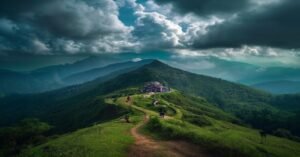
Once you pass the forest checkpost, there are no built washrooms. Western Ghats trails pass through shola forests, grasslands, and ridge lines. Trail privacy requires practical outdoor habits:
- The Buddy System: Never step off the main path alone to find privacy. Always inform your female lead or a fellow trekker. They will stand guard on the main trail while you step behind a terrain contour or thick brush away from water sources.
- Waste Management: Carry two zip-lock bags inside your daypack—one for clean tissue/sanitary supplies and one opaque bag lined with paper for used items. Never bury or leave sanitary products in the forest; everything you carry up must be packed back out to the base homestay.
- Monsoon Realities: During the monsoon months from June to September, stepping into tall grass off the main path means dealing with leeches. Wearing full-length synthetic trek pants and applying leeches spray or gaiters around your boots helps minimize exposure. Read our monsoon treks in Karnataka guide for full seasonal packing advice.
Forest Regulations and Permit Protocols
In Karnataka, trekking safety is heavily tied to compliance with the Karnataka Forest Department. Unregistered operators who attempt to bypass checkposts put participants at risk of fines, delays, or being turned back late in the day.
Official trails—including Netravathi, Kodachadri, and Kumara Parvatha—require mandatory digital registration and verification at forest entry gates. Detailed guidelines on these procedures are outlined in our Karnataka trek permits guide. The state has also implemented streamlined entry rules and trekker caps detailed in our overview of Karnataka trek SOP rules.
When traveling with an organized group, the primary lead presents group identification and entry passes at the checkpost. Forest guards check backpack contents for single-use plastic bottles and alcohol. Controlled entry points ensure that local forest guides accompany groups on designated routes like the popular route covered in our Ettina Bhuja permits guide, adding an extra layer of local geographical knowledge and safety.
Questions to Ask Before Joining a Group
Before registering for any weekend trek from Bengaluru as a solo female traveler, contact the operator directly and ask these five direct questions:
- What is the male-to-female ratio of the confirmed participants for this specific batch?
- Will there be a dedicated female trip lead accompanying the group from Bengaluru?
- Does the vehicle have dedicated window/aisle seating reserved for solo female participants?
- Are forest entry permissions verified via the official state portal prior to departure?
- What is the protocol if a participant becomes injured or exhausted halfway up the trail?
A transparent operator will answer these questions clearly without vague statements. Solo trekking within an organized group allows you to experience the solitude of the Western Ghats ridge lines while maintaining structured safety, reliable transport, and practical support throughout the journey.